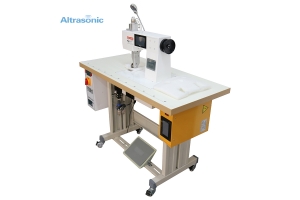
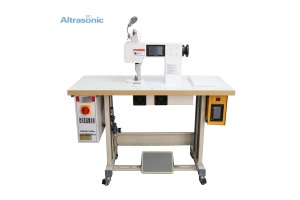
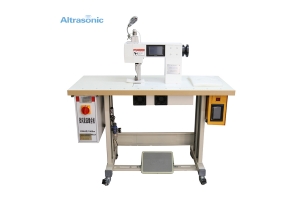
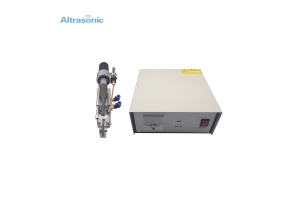
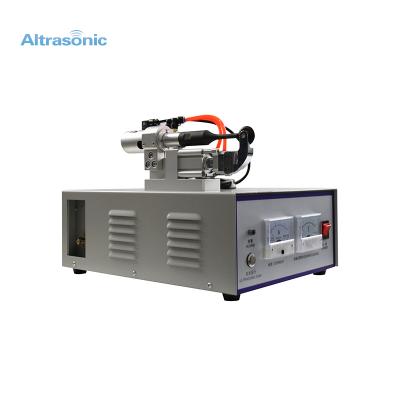
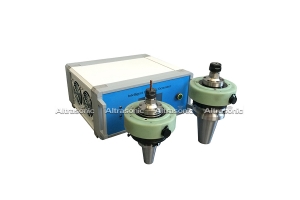
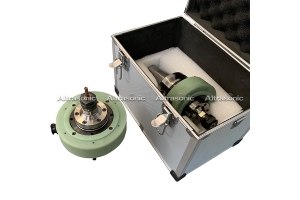
The ultrasonic sewing machine is working by radial wave, has high sealing efficiency and stable sealing performance. It's applied for all kinds of chemical fiber fabrics, would be a competitive product in the sewing machine market.
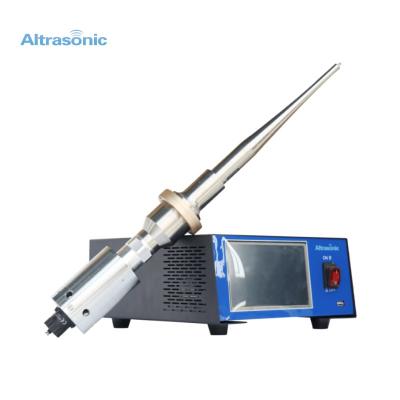
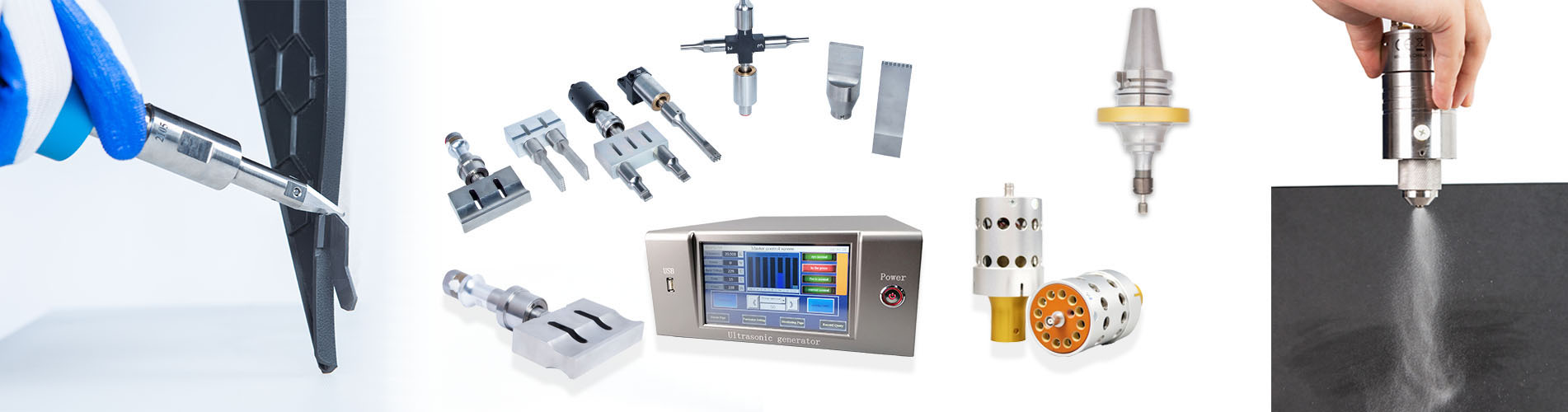
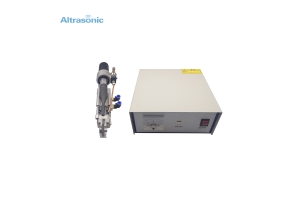
The excellent ultrasonic control technology can ensure the stability of long-term machining. Frequency scanning and power setting can be completed automatically by controller to improve productivity.
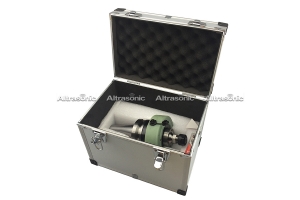
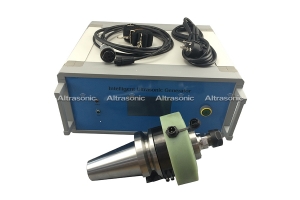
The tool oscillates at a frequency of approximately 20 kHz by a piezoelectric sensor and an electric oscillator. The tool forces the abrasive grit to normally impact the work surface in the gap between the tool and the workpiece to machine the work surface.
Ultrasonic sewing machine is specially designed for sewing of thermoplastic fabrics such as nylon fabric, PVC, PU, TPU fabric and non-woven fabric, completely replace the traditional sewing machine, no need needle and thread.
This equipment can simultaneously seal and cut edges and can be used in the garment manufacturing industry, suitable for cutting all kinds of fabrics of different thicknesses.
This equipment is suitable for the production of tea bags and can simultaneously seal and cut plastic bags. It has good airtightness and can greatly improve production efficiency.
The excellent ultrasonic control technology can ensure the stability of long-term machining. Frequency scanning and power setting can be completed automatically by controller to improve productivity.
The tool oscillates at a frequency of approximately 20 kHz by a piezoelectric sensor and an electric oscillator. The tool forces the abrasive grit to normally impact the work surface in the gap between the tool and the workpiece to machine the work surface.